
The Laboratoire de Physique (CNRS UMR 5672) of the ENS Lyon studies experimentally, theoretically and numerically the role played by non-linear effects or fluctuations in the dynamics of several non-equilibrium phenomena.
The laboratory covers a broad spectrum of research topics including hydrodynamic instabilities, turbulence, biological systems, statistical mechanics, signal processing and the study of fluctuations in non-equilibrium or small systems, high energy, gravitational and mathematical physics, as well as quantum devices and materials.
The diversity of topics studied allows this laboratory to tackle old problems and emerging ones, combining modelling and experiments at the highest level. Internal expertise in the laboratory can rely on a ground of exact results, on advanced numerical approaches, and on experiments that keep inventing new tools.
Key people on the project
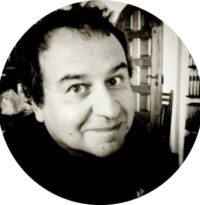
Pascal DEGIOVANNI, PI at ENS Lyon, is a researcher from CNRS, who works within the Physics Laboratory at the Ecole Normale Supérieure of Lyon. He did his PhD at ENS Paris on Conformal and Topological Field Theory. In the first part of his career, his research was mainly focused on Mathematical Physics and more precisely on the relation between geometry, topology and quantum field theory. Towards the end of the 90s, he shifted research interests towards Quantum Mesoscopic Physics at a time where technological progresses in nano-fabrication and radio-frequency techniques have opened the possibility to explore the physics of quantum coherent electrical circuits using controlled on-demand single to few electron excitations, thereby leading to an emerging field called electron quantum optics.
Motivated by these experimental breakthrough, Pascal Degiovanni has significantly contributed to the theoretical framework for electron quantum optics. His present work includes proposing quantum tomography protocols for reconstructing the quantum state of these excitations, as well as modelling of electronic decoherence effects and quantifying interaction induced entanglement in electron quantum optics experiments.
He has also co-authored a book on quantum physics, information and computation based on lectures he has delivered at the ENS Lyon.
Members
- Giacomo Rebora (postdoc).